Steel plants handle a huge amount of material every day. From iron ore and coal to finished steel products, everything needs to be moved from one place to another.Conveyor Belts for Steel Industry play an important role in making this material handling process faster, smoother and more efficient.
However, working in a steel plant is not easy for industrial conveyor belts. They have to carry heavy materials, handle dust and operate for long hours. High temperatures and rough materials can also cause wear and damage to conveyor systems.
These challenges may look small at first, but they can affect daily production, increase maintenance costs and lead to unexpected downtime if they are not addressed on time.
Let’s understand the common steel industry conveyor belt challenges and explore practical solutions to keep material handling operations running smoothly.
Why Do Steel Plants Need Conveyor Belts?
Imagine moving tons of iron ore or coal manually every day. It would take a lot of time and workers. Conveyor belts make this job much easier.
They carry materials between different sections of a plant and help keep work moving without unnecessary delays.
In steel manufacturing, industrial conveyor belts are commonly used to move raw materials, transfer products between processing areas and handle finished goods.
A good conveyor system also helps reduce manual work and makes material handling easier.
Common Problems with Conveyor Belts in Steel Plants
1. Heat Can Damage the Belt
Some materials used in steel production are handled at very high temperatures. When a normal conveyor belt is exposed to too much heat, it may become hard, develop cracks or lose its strength.
What can be done?
A heat-resistant conveyor belt is a better choice for applications involving hot materials. It is important to select a belt that can handle the actual working temperature.
2. Carrying Heavy Materials Every Day
Steel plants move large quantities of materials throughout the day. This puts continuous pressure on conveyor belts.
If the belt is not strong enough, it may stretch, tear or wear out earlier than expected.
What can be done?
Choose a belt according to the weight and type of material being transported. A suitable heavy-duty conveyor belt can handle demanding working conditions more effectively.
3. Rough Materials Wear Out the Belt
Iron ore, limestone and coal are not smooth materials. Their rough surfaces can slowly damage the belt during transportation.
Over time, this damage can reduce the belt’s working life.
What can be done?
Use an abrasion-resistant belt for materials that cause more surface wear. Proper loading also helps reduce the impact on the belt.
4. Dust Makes the Working Area Dirty
Dust is a regular part of steel plant operations. When coal, iron ore and other materials move through conveyor systems, small particles can spread around the area.
This creates cleaning problems and may affect nearby equipment.
What can be done?
Regular cleaning, proper belt cleaners and dust control arrangements can help keep the conveyor area clean.
5. The Belt Does Not Move Straight
Have you ever noticed a conveyor belt moving towards one side instead of running in the centre? This is called belt misalignment.
It can happen because of uneven material loading, damaged rollers or incorrect pulley alignment.
What can be done?
Check the rollers, pulleys and belt position regularly. Correct alignment helps the belt run smoothly and prevents damage to its edges.
How to Choose the Right Conveyor Belt?
Every steel plant has different working conditions. A belt that works well for one application may not be suitable for another.
Before selecting conveyor belts for the steel industry, it is important to check a few things:
- What type of material will the belt carry?
- How heavy is the material?
- Will the belt be exposed to heat?
- How many hours will the conveyor run each day?
- What are the space and layout requirements?
These details make it easier to choose a conveyor belt that suits the actual work.
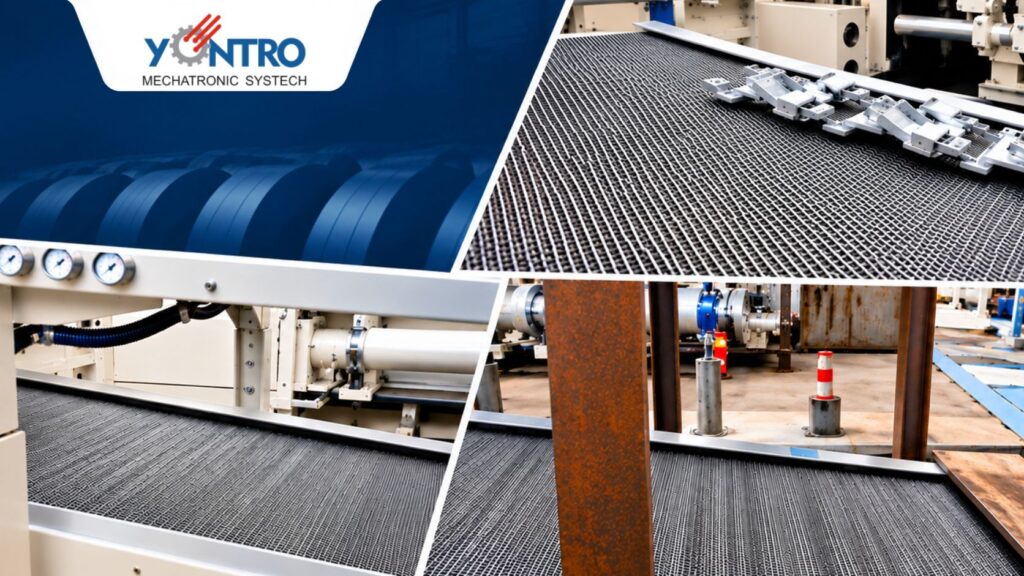
Mesh Flat Belt Conveyor
Don’t Ignore Regular Maintenance
Many conveyor belt problems can be avoided with simple maintenance. There is no need to wait until the belt stops working completely.
A regular check can help identify small issues before they become expensive repairs.
Make sure to check the belt surface, rollers, pulleys and joints. Also, keep the conveyor clean and look for signs of unusual wear.
Good conveyor belt maintenance can help reduce unexpected breakdowns and keep production running smoothly.
Finding the Right Conveyor Solution for Your Business
Choosing a conveyor system is not just about buying a machine. It is about finding something that fits your work, available space and production needs.
Yontro Mechatronic Systech offers different industrial conveyor solutions, including flat belt conveyors, Mesh flat belt conveyor, inclined conveyors and customised systems.
The right option depends on what you need to move and how your production area is set up.
You can explore the available conveyor systems to understand which solution may work for your business.
Final Thoughts
Conveyor belts do an important job in steel plants. They keep materials moving and help different parts of production work together.
But heavy loads, heat, dust and rough materials can make their work difficult. The right belt and a little regular care can prevent many common problems.
At the end of the day, a conveyor system should make work easier, not create more problems for the production team.
