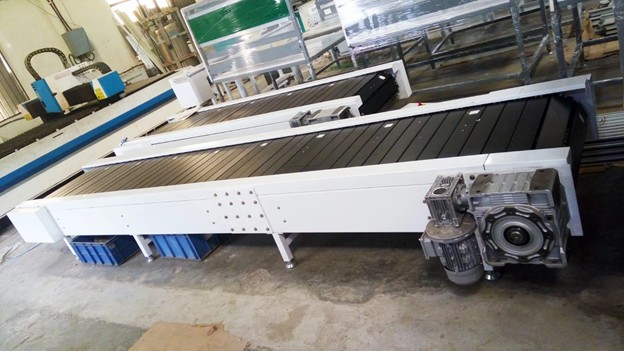
Manufacturing systems in present-day facilities need to achieve operational efficiency through their built-in machine systems and their properly functioning complete system assembly. Factory planning faces its most essential element, which remains unrecognized by many people through the process of designing conveyor systems. A factory system which has been properly designed for conveyor systems will achieve better material movement while simultaneously improving factory production output, space organization, operational flow, safety standards, and future facility
expansion possibilities.
Table of Contents
1. Optimized Material Flow and Reduced Bottlenecks
The factory uses conveyor line to transport raw materials and components, and finished products throughout its facility. The design of conveyor systems which lacks proper planning leads to traffic conflicts that result in operational delays and operational blockages. A properly designed conveyor system will move materials in a straight path. This reduces the need for manual handling and prevents production flow interruptions.
The process of matching conveyor operations to production workflows, which include assembly, inspection, packing, and dispatch operations, helps manufacturers decrease wait periods while boosting their production speed.
2. Better Space Utilization of Conveyor Line
Your knowledge base contains information up to the month of October in the year 2023. The design of conveyor systems determines how factories utilize their limited and costly operational area. Manufacturers can use overhead conveyors and incline conveyors and multi-level systems to create vertical space which enables them to maintain their operational equipment in their designated areas.
The factory layout design allows all space to be utilized for production purposes which prevents any area from becoming unproductive space. This feature becomes vital for operational efficiency in both small facilities and growing production facilities which need to adapt their workspace.
3. Improved Worker Safety and Ergonomics
The unplanned workspace design requires workers to move between areas which results in higher accident rates and more worker exhaustion. The installation of conveyor systems establishes a secure work environment which protects workers from lifting and carrying activities and prevents repetitive motion injuries.
The effective operation of conveyor systems establishes specific routes for materials and personnel which decreases the chances of accidents and enhances workplace safety. The system helps factories maintain safety regulations while reducing operational interruptions that result from worker accidents.
4. Flexibility for Future Expansion of Conveyor Line
Manufacturing requirements will change. It is a certainty that a product will be developed, production volume will increase, or a change will occur in an existing process. The design of a conveyor line should never be fixed. Modular conveyors will allow a factory to change their layout without disrupting production.
A forward-thinking design for the conveyor itself makes it simpler to accommodate new machines, increase conveyor lengths, or change the direction of material flow if prevailing production demands change.
5. Integration with Automation and Industry 4.0
Today’s factories utilize a high degree of automation. Conveyors are the backbone of a modern automated material handling system and must integrate well with robotic systems, PLCs, and quality inspection devices.
Smart conveyor system designs allow for timely tracking, synchronizations, and reduced manual interactions, thus increasing the efficiency and futuristic prospects of factories.
Why Expert Conveyor Design Matters
Designing a conveyor line requires more than just choosing belts and rollers because it requires complete knowledge of the manufacturing system. This is where experienced solution providers make a real difference.
Yontro Mechatronic Systech creates tailored conveyor systems which perfectly match factory designs and production requirements. Yontro designs its operations to achieve maximum efficiency through its flat belt conveyors and assembly lines and incline and truck loading conveyor systems. Their engineering-driven approach ensures that conveyor systems don’t just fit into a factory—they enhance it.
Conclusion
Conveyor line design establishes permanent effects which determine factory layout and production efficiency and business operational success. A well-planned system improves material flow, optimizes space, enhances safety, and prepares the factory for future growth. Expert conveyor design requires investment because it functions as a strategic business choice rather than a financial burden.
The partnership with Yontro Mechatronic Systech enables manufacturers to create advanced factories which achieve peak efficiency by adapting to current demands and future possibilities.